
On-Hook vs. Garage Keeper's: What Every Tow Operator Must Know
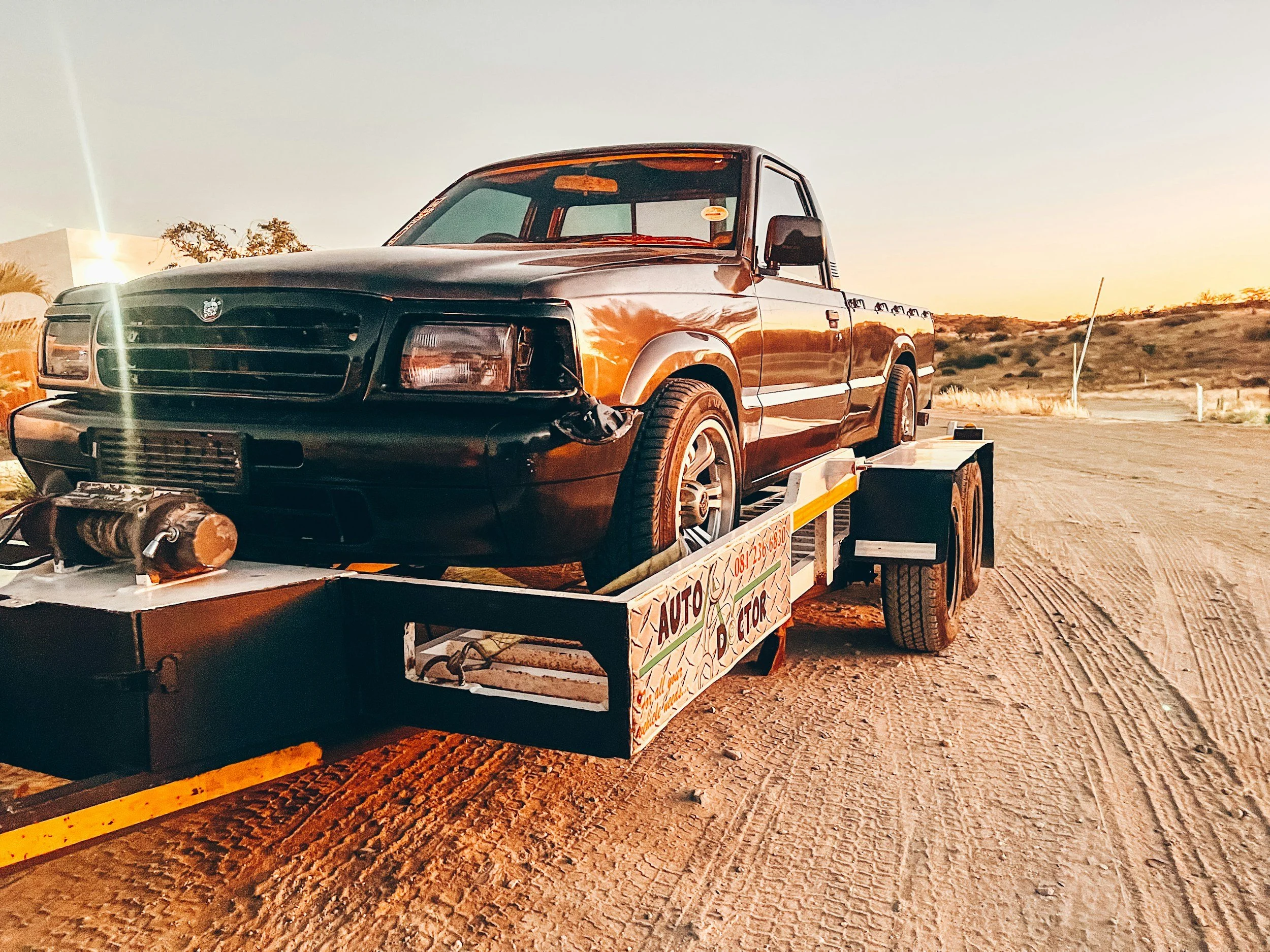
If you operate a towing business, you’re responsible for other people’s vehicles — sometimes the most valuable thing they own. When something goes wrong, whether it’s a car sliding off a flatbed on the highway or a vehicle stolen from your impound lot, you need to know exactly which insurance policy responds.
Two coverages that tow operators routinely confuse are On-Hook coverage and Garage Keeper’s Liability. They sound similar, they both protect vehicles in your care, and they’re often sold together — but they cover fundamentally different situations. Mixing them up can leave you with a claim denial at the worst possible moment.
Here’s what every tow operator needs to understand about both.
What Is On-Hook Coverage?
On-Hook coverage (sometimes called Tow Truck Insurance or Cargo Coverage for towers) protects vehicles while they are being towed — meaning the vehicle is physically attached to your truck, whether on a flatbed, dollies, or a wheel-lift.
If the vehicle sustains damage during the towing operation, On-Hook coverage responds. It’s designed specifically for the exposure that exists the moment you hook up to a vehicle and begin moving it.
Common On-Hook claims include:
• A vehicle shifts and falls off a flatbed during transport
• A car is damaged when the tow truck is rear-ended while in transit
• Chains or straps cause damage to the towed vehicle
• A vehicle makes contact with an underpass or obstacle while being transported
On-Hook coverage applies only while the vehicle is in transit. Once it’s off your truck and sitting on your lot, that coverage stops.
What Is Garage Keeper’s Liability?
Garage Keeper’s Liability (GKL) is an entirely different exposure. It covers vehicles that are in your physical custody but not in transit — vehicles stored on your lot, parked in your impound yard, or left at your facility while awaiting pickup or repair.
As a towing company, you become a “bailee” when a customer or municipality entrusts their vehicle to your care. Garage Keeper’s Liability protects you against claims arising from physical damage to those vehicles while they’re under your watch on the ground.
Common Garage Keeper’s claims include:
• Fire spreads through your storage lot and damages multiple vehicles
• A vehicle is stolen from your impound yard
• Flood or storm damage affects cars stored at your facility
• Vandalism occurs overnight on vehicles in your care
• An employee accidentally damages a customer’s vehicle while moving it on the lot
Garage Keeper’s Liability applies the moment the vehicle leaves your truck and enters your custody on the ground — the exact moment On-Hook coverage ends.
Why the Distinction Matters for Claim Outcomes
The handoff between these two coverages is where claims disputes most often arise. Consider this scenario:
A tow truck picks up a vehicle and transports it to an impound lot. During unloading, the vehicle is damaged. Is this an On-Hook claim or a Garage Keeper’s claim?
The answer depends on the precise moment the damage occurred and your policy language. Some policies draw the line at the moment the vehicle touches the ground. Others define it by when the tow chain is released. If you don’t understand your policy’s trigger language — or if your limits are mismatched between the two coverages — you could face a coverage gap right in the gray zone between transit and storage.
This is exactly why these coverages need to be reviewed together, not treated as independent line items.
Key Coverage Considerations for Each
On-Hook Coverage:
• Limits should reflect the value of the most expensive vehicle you routinely tow — luxury cars, heavy equipment, and commercial vehicles all require higher limits
• Some policies cover only vehicles you’re towing for a fee; others extend to vehicles you’re towing as part of a roadside assistance program
• Check whether the policy covers damage to the towed vehicle caused by the insured driver’s negligence (not all do)
• If you tow motorcycles, RVs, or boats, verify those are included — many standard policies exclude them
Garage Keeper’s Liability:
• Limits need to account for the total value of vehicles on your lot at any given time — not just the average, but the peak
• Understand whether your policy is “direct primary” (pays regardless of the vehicle owner’s own insurance) or “direct excess” (pays only after the owner’s coverage is exhausted)
• Impound operators may face higher theft exposure than standard towing companies and should ensure their limits reflect that
• Some policies require specific security measures (fencing, lighting, cameras) to maintain coverage — review your policy conditions carefully
Who Needs Both Coverages?
Not every tow operator has the same exposure. Here’s a quick way to think about it:
• If you only tow vehicles and release them at the destination immediately: On-Hook is your primary vehicle damage exposure
• If you store vehicles overnight, operate an impound lot, or hold cars awaiting owner pickup: you need Garage Keeper’s Liability
• If you do both (most towing companies do): you need both coverages, properly coordinated
Many towing operations that believe they’re covered for stored vehicles find out at claim time that their policy only includes On-Hook — because that’s all they asked for when they bought it. Don’t let that be you.
Common Coverage Gaps to Watch For
• Mismatched limits: On-Hook limit is adequate but Garage Keeper’s limit hasn’t been updated as your storage business grew
• Policy exclusions for specific vehicle types you regularly handle
• No coverage for employee dishonesty or theft by a staff member
• Inadequate coverage for vehicles held for extended periods (lien sales, police holds)
• Assuming your general liability policy covers physical damage to vehicles in your care — it doesn’t
The Bottom Line
On-Hook coverage and Garage Keeper’s Liability aren’t competing coverages — they’re complementary. Together, they form a complete picture of protection for the vehicles entrusted to your operation from the moment you hook up to the moment a customer drives away.
Understanding where one ends and the other begins isn’t just an insurance technicality. It’s the difference between a covered claim and an out-of-pocket loss that could run into tens of thousands of dollars.
At Affinity Risk, we specialize in insurance solutions for towing and transportation businesses. Our advisors understand the unique exposures you face and can help you structure coverage that leaves no gaps between your hook and your lot.
Contact an Affinity Risk advisor today to review your current towing coverage.
© Affinity Risk | This content is for informational purposes only and does not constitute legal or insurance advice. Coverage terms vary by policy.